

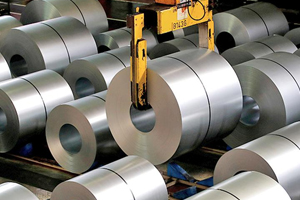
Galvanized vs Aluminized vs ZAM Steel——The Complete Comparison Guide
1. Background & Market Overview
In the field of steel surface treatment, coating technology is the primary means of extending material service life and improving corrosion resistance. Galvanized steel (GI), aluminized steel (AS), and zinc-aluminum-magnesium coated steel (ZAM) are the three most widely used hot-dip coated steel products globally, with broad applications across the automotive, construction, appliance, and HVAC industries.
The fundamental distinction among the three lies in coating chemistry and the protection mechanism each provides to the steel substrate:
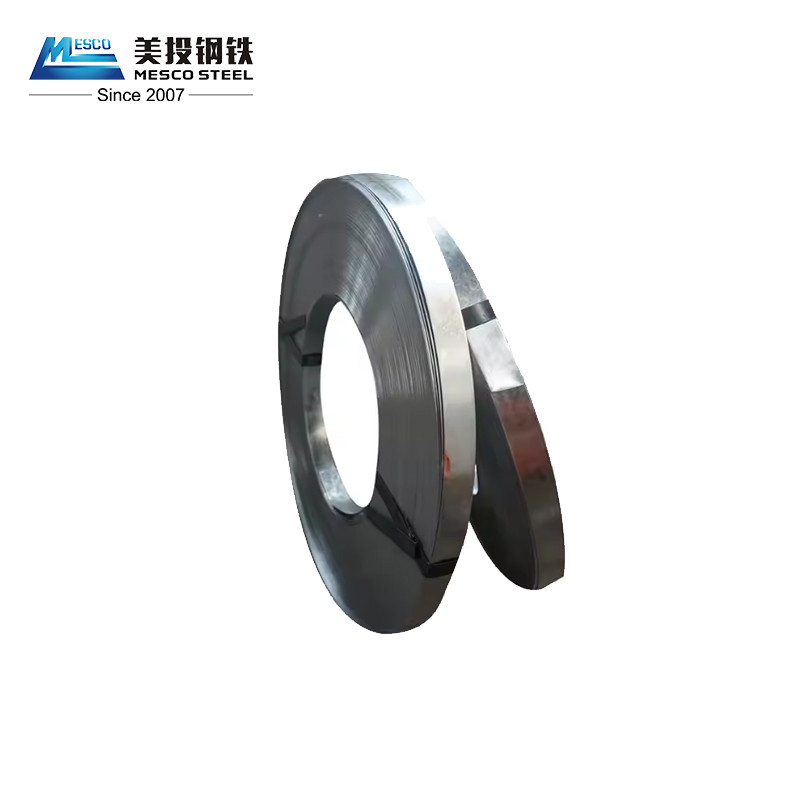
•Galvanized Steel (GI): Pure zinc coating that protects the steel substrate through electrochemical sacrificial anode action. It commands the highest market share and lowest price among the three.
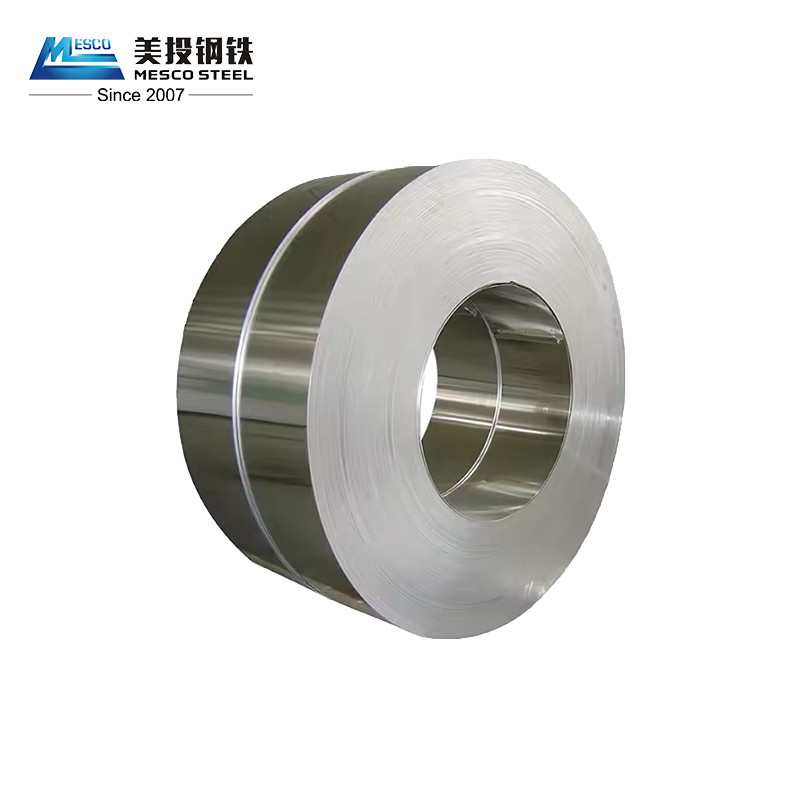
•Aluminized Steel (AS): Coated with an aluminum-silicon alloy (typically ~55% Al + 43% Zn + 1.5% Si) or pure aluminum (Type 2). It delivers outstanding high-temperature resistance and excellent thermal reflectivity.
•ZAM Steel: Coated with a zinc-aluminum-magnesium ternary alloy (typically Zn-6%Al-3%Mg). This next-generation high-performance coated steel has surged in adoption in recent years, offering comprehensively superior corrosion resistance compared to conventional galvanized steel.
2. Coating Composition & Manufacturing Process
2.1 Galvanized Steel (GI)
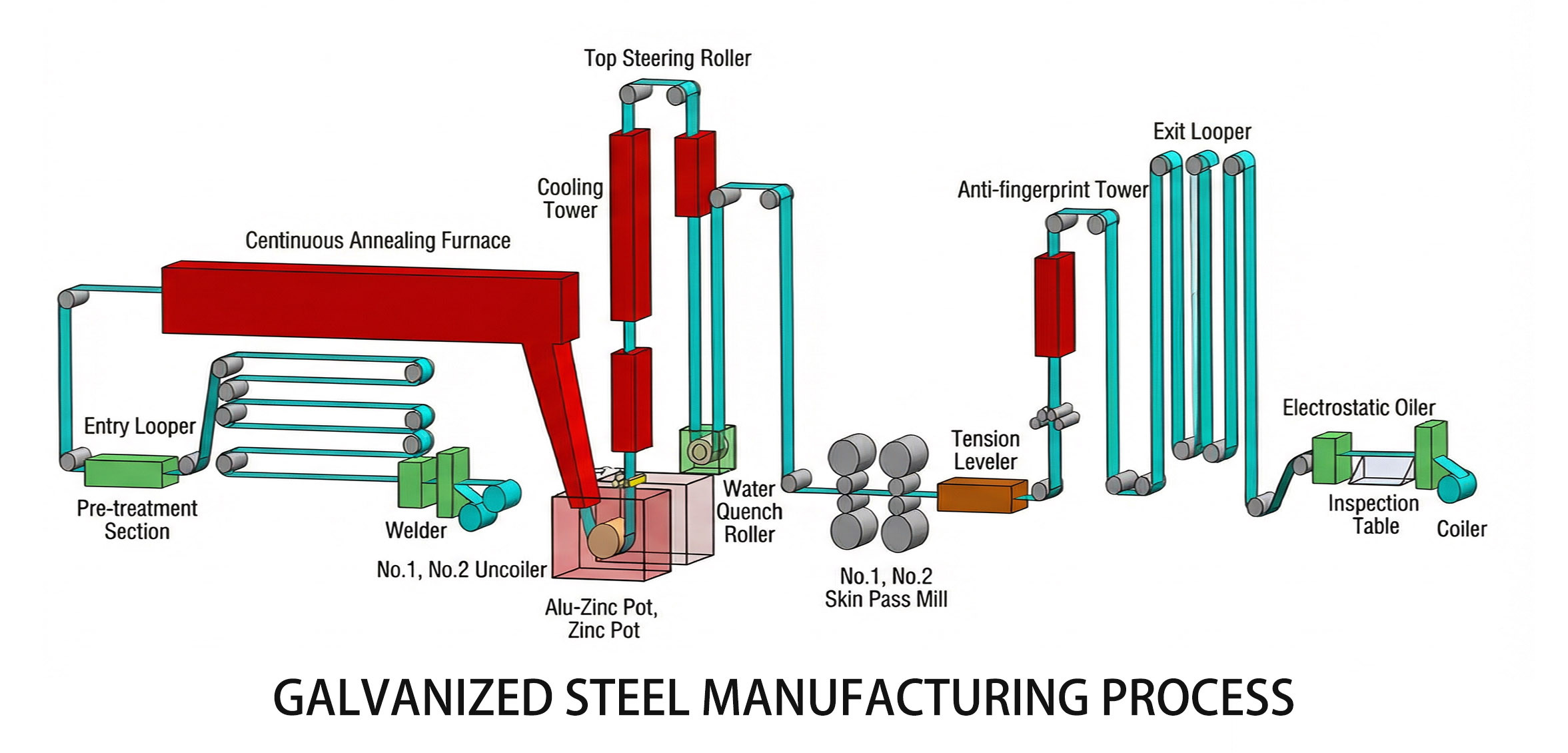
Galvanized steel is produced using a continuous hot-dip galvanizing process, in which cold-rolled steel strip passes through a bath of molten zinc at approximately 450 degrees C, forming a composite coating consisting of an Fe-Zn alloy interlayer and an outer pure zinc layer.
•Coating weight range: Typically Z100-Z600 (100-600 g/m2, total both sides). Z275 is the most common grade for general construction applications.
•Protection mechanism: Zinc has a lower electrochemical potential than iron, providing sacrificial cathodic protection. Even when the coating is scratched, the surrounding zinc corrodes preferentially, shielding the exposed steel substrate.
•Post-treatment options: Phosphating, passivation, and painting can be applied to further enhance corrosion resistance and paint adhesion.
2.2 Aluminized Steel (AS)
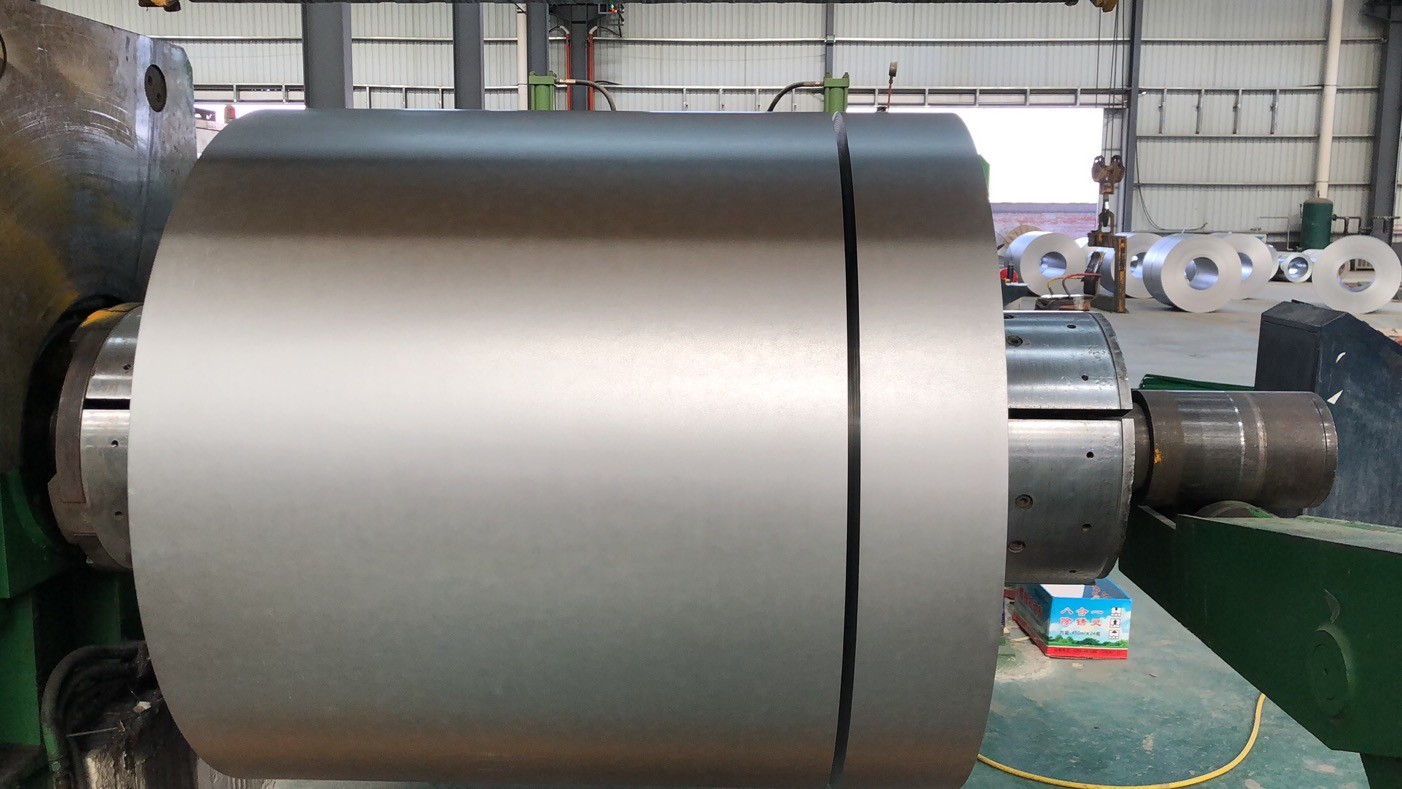
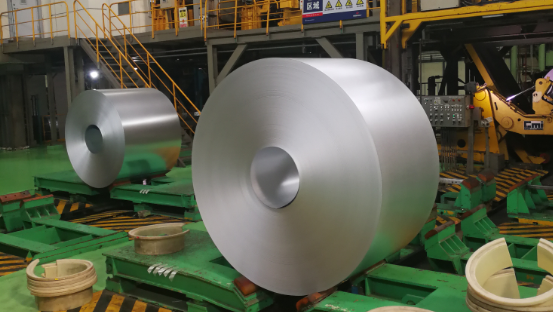
Aluminized steel is produced by a hot-dip process, immersing steel strip in a molten aluminum-silicon alloy bath. Two commercial types are defined:
•Type 1: Aluminum-silicon alloy coating (~91% Al + 9% Si). Silicon is added to suppress the growth of the brittle Fe-Al intermetallic layer, improving formability. This is by far the most common commercial type.
•Type 2: Pure aluminum coating (99%+ Al), used in specialized environments requiring high aluminum purity. Relatively uncommon in practice.
The key advantage of aluminized steel lies in aluminum's ability to form a dense, protective aluminum oxide (Al2O3) film at elevated temperatures, maintaining structural integrity in sustained service temperatures above 650 degrees C -- a performance level that galvanized steel simply cannot achieve.
2.3 ZAM Steel (Zinc-Aluminum-Magnesium Alloy Coated Steel)
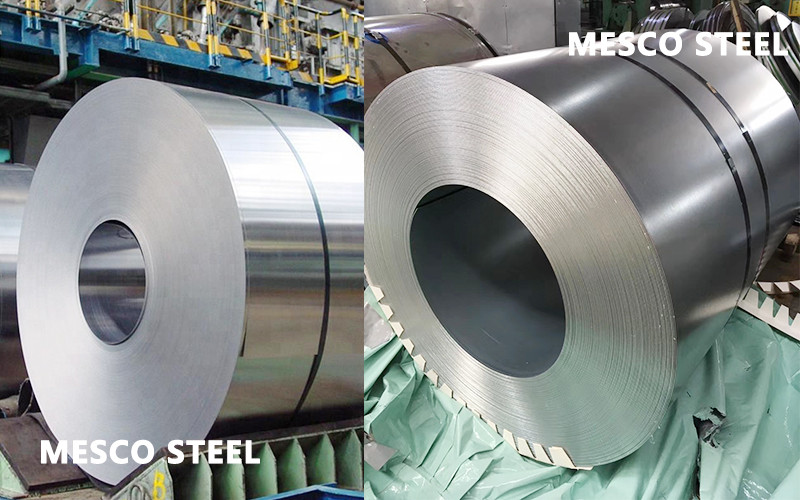
ZAM was first commercialized by Nippon Steel and represents a new class of high-performance coated steel. Its coating is a ternary alloy of zinc, aluminum, and magnesium with a typical composition of Zn-6%Al-3%Mg, applied via the hot-dip process.
The addition of magnesium (Mg) is the most critical technical breakthrough in ZAM:
•During corrosion, magnesium promotes the formation of dense corrosion products -- basic magnesium chloride and zinc hydroxide -- that create a self-healing protective film at cut edges, scratches, and other exposed areas.
•Aluminum enhances overall corrosion resistance and strengthens the bond between the coating and the steel substrate.
•Compared to galvanized steel of equivalent coating weight, ZAM can extend service life by a factor of 3 to 6 times.
3. Core Performance Comparison
The table below provides a systematic comparison of the three coated steels across 11 key performance dimensions:
| Performance Indicator | Galvanized Steel (GI) | Aluminized Steel (AS) | ZAM Steel |
| Coating Composition | Pure zinc (Zn) | Al-Si alloy (~55% Al) | Zn-Al-Mg ternary alloy |
| Corrosion Resistance | Good (3/5) | Excellent, esp. at high temp (4/5) | Best, esp. at cut edges (5/5) |
Max. Service Temperature | ~200 degrees C | ~650 degrees C | ~300 degrees C |
Thermal Reflectivity | Low | High (~80%) | Medium |
Cut-Edge Protection | Good (galvanic sacrifice) | Weak | Excellent (self-healing) |
Coating Weight | Heavier (Z275 = 275 g/m2) | Medium (AS80 = 80 g/m2) | Light (ZM70 = 70 g/m2) |
Formability | Excellent | Good | Excellent |
Weldability | Good | Requires special handling | Excellent (high adhesion) |
Price Range | Lowest | Medium | Medium-High |
Service Life | 15-25 yrs (outdoor) | 20-30 yrs (general env.) | 25-40 yrs (corrosive env.) |
Key Takeaway
In terms of corrosion resistance, ZAM offers the best overall performance -- particularly in chloride-containing environments such as coastal and industrial zones. Aluminized steel is irreplaceable in high-temperature applications. Galvanized steel remains the most cost-effective choice for standard, non-demanding applications.
4. In-Depth Performance Analysis
4.1 Corrosion Resistance
Corrosion resistance is the primary criterion in material selection. The three materials perform very differently across corrosion environments:
Salt Spray Test Comparison (Equivalent Coating Weight ~70-80 g/m2)
•Galvanized Steel (Z80): Red rust typically appears after 120-200 hours in the Neutral Salt Spray (NSS) test.
•Aluminized Steel (AS80): Withstands approximately 500-800 hours of salt spray. However, because it lacks a sacrificial anode effect, protection drops off rapidly once the coating is scratched.
•ZAM (ZM70): Exceeds 1,000-2,000 hours in salt spray testing. Cut-edge protection is excellent; the self-healing mechanism continues to slow corrosion even at damaged areas.
4.2 High-Temperature Performance
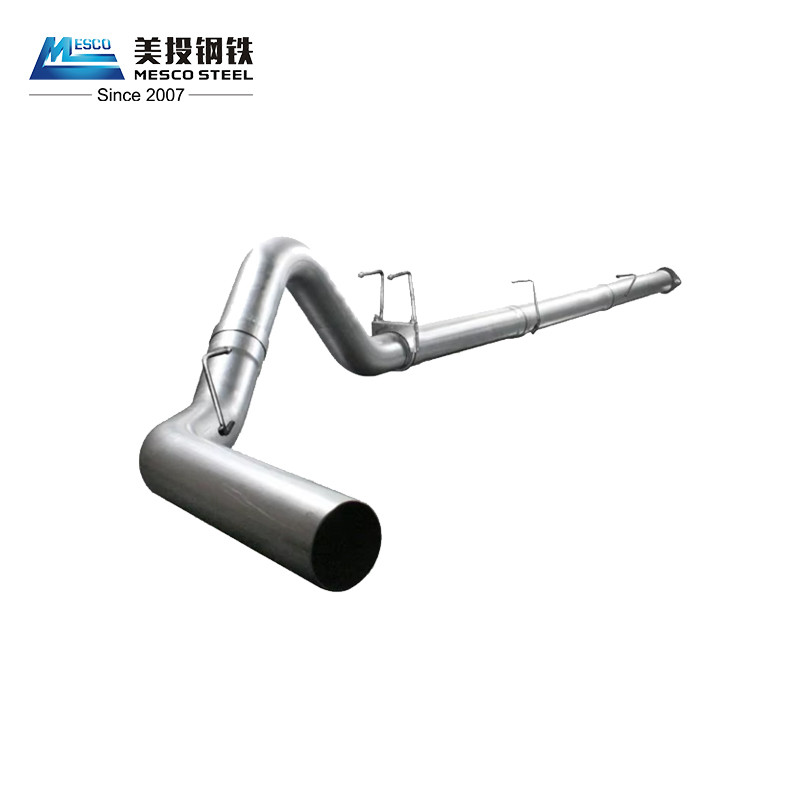
High-temperature performance is the area of most pronounced differentiation among the three, directly determining suitability for hot-end components such as automotive exhaust systems and industrial furnace equipment:
•Galvanized Steel: Zinc melts at only 419 degrees C. Above 200 degrees C, zinc volatilization begins, making it unsuitable for sustained high-temperature applications.
•Aluminized Steel: Aluminum melts at 660 degrees C and forms a dense aluminum oxide protective film at high temperatures. It can withstand continuous service at approximately 650 degrees C, with localized peak temperatures exceeding 700 degrees C. It is the material of choice for automotive exhaust systems and industrial heat treatment equipment.
•ZAM Steel: Heat resistance falls between the other two at approximately 300 degrees C -- far superior to galvanized steel, but not suitable for high-temperature hot-end components.
4.3 Formability
The formability of each material -- including stretching, bending, and stamping -- has a direct bearing on downstream manufacturing processes:
•Galvanized Steel: Excellent ductility and formability. Well-suited for deep drawing and complex stamping. Decades of accumulated process know-how make it the easiest to work with.
•Aluminized Steel: Good formability, but the Fe-Al intermetallic interlayer is relatively hard and brittle. Excessive deformation can cause coating cracking; lubrication and tooling parameters must be adjusted accordingly.
•ZAM Steel: Excellent formability with a highly ductile coating. Suitable for all types of press-forming operations. The self-healing property at cut edges after forming is an additional advantage.
4.4 Weldability
•Galvanized Steel: Resistance spot welding and MIG welding are well-established processes. Zinc vapors can cause weld porosity; parameters must be optimized. Weld fumes contain zinc oxide -- adequate ventilation is essential.
•Aluminized Steel: Welding is more challenging. Aluminum's high thermal conductivity and surface oxide film impede fusion. Higher welding currents are typically required, and post-weld inspection of weld quality is necessary.
•ZAM Steel: Weldability is comparable to galvanized steel. Spot welding parameters need minor adjustments, but the overall process maturity is high.
4.5 Paintability & Post-Treatment
Coated steel destined for end products -- such as appliance housings or pre-painted building panels -- typically requires a painting process:
•Galvanized Steel: Phosphating treatment is required to improve paint adhesion. The process is mature and widely practiced.
•Aluminized Steel: The natural aluminum oxide film provides a degree of adhesion, but surface pre-treatment is still generally required to ensure consistent coating quality.
•ZAM Steel: Excellent paint adhesion. High-quality coating can be achieved with a simplified pre-treatment process, helping to lower production costs.
MESCO STEEL
Email: mesco@mescogroup.com.cn
Mobile / Whatsapp: +86 15134565556
Website: www.mescogroup.com.cn
Sincere, Professional, Effective, Innovative!
19years 98countries 600+clients