

To be a Respected China Coating Steel Supplier
Can't find what you are looking for?providing the solution of the industrial raw materials based on the steel
Contact us for free modeling
Just fill-in the form below and we will response to you within 12 hours.
- Phone
- *Title
- *Content
Copper–Steel Composite Plates
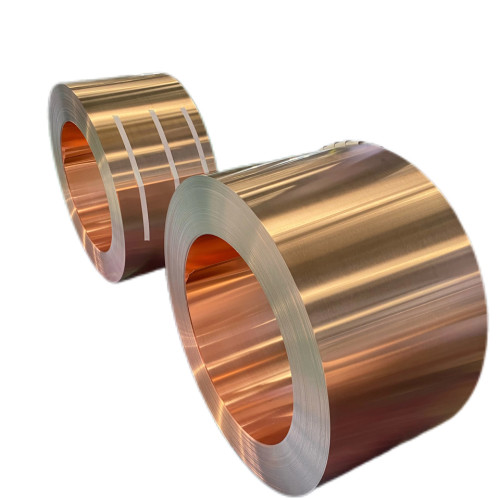

Detail Information
Copper–Steel
Composite
Plates
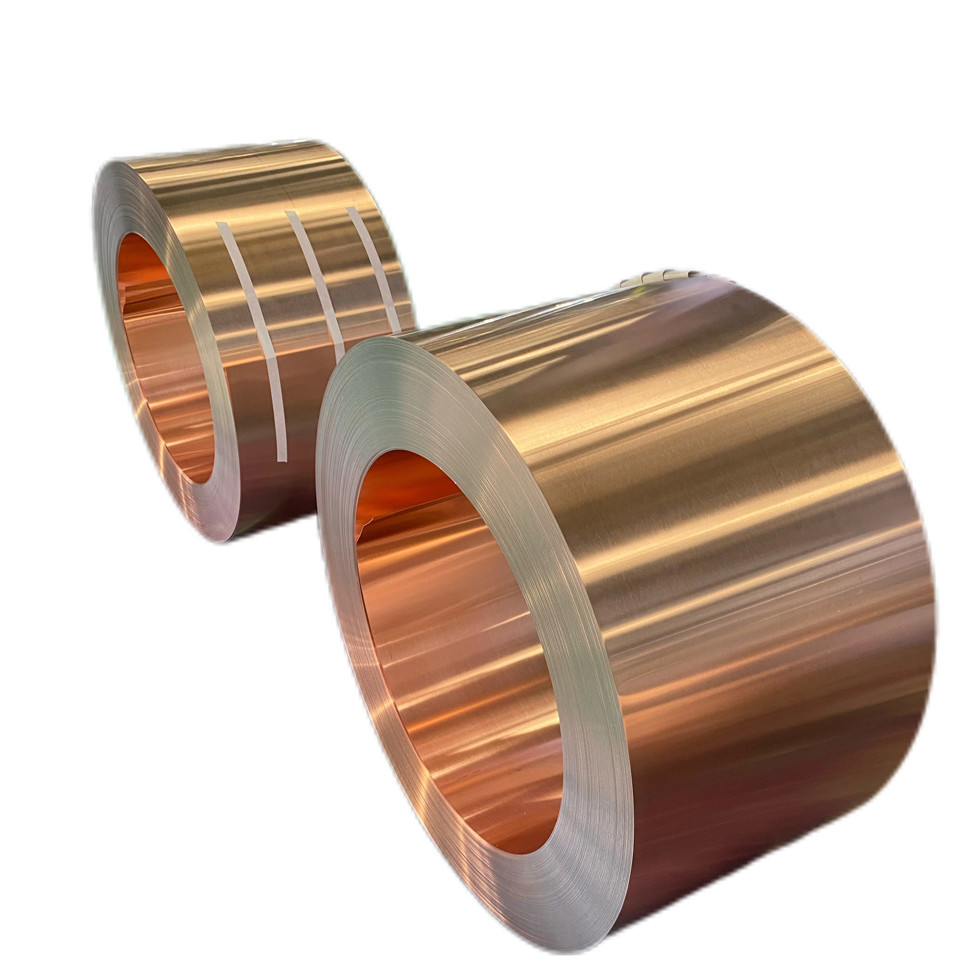
Advanced Composite Materials
Precision-bonded multilayer composites combining the thermal conductivity of T2 pure copper with the mechanical strength and corrosion resistance of 304/316 stainless steel — engineered for demanding industrial applications.
Material Specifications
All composite plates are manufactured to precise dimensional tolerances, meeting stringent metallurgical bonding standards for industrial performance.
| Thickness | 0.06 – 3 mm | Ultra-thin to structural gauges available. Custom thickness on request. |
| Width | 580 – 600 mm | Consistent strip width for roll-forming and stamping operations. |
| Bonding Method | Roll-Clad | Metallurgical diffusion bonding under controlled pressure and temperature. |
| Copper Grade | T2 Pure Cu | ≥99.9% purity. Superior electrical and thermal conductivity. |
Steel Grade | SS 304 / 316 | Austenitic stainless steel. 316 grade for enhanced Mo-bearing corrosion resistance. |
Surface Finish | 2B / BA / No.4 | Multiple finish options available. Custom surface treatment on inquiry. |
Laminate Configurations
| # | Configuration | Layer Structure | Key Properties | Typical Use |
| 01 | SS + Cu + SS | 304/316 T2 Cu 304/316 | Symmetrical structure, high strength outer faces, copper core for conductivity | Heat exchangers, cookware, precision electronics housings |
| 02 | Cu + SS + Cu | T2 Cu 304/316 T2 Cu | Copper outer faces for conductivity/wettability, SS core for rigidity | Power electronics heat spreaders, welding applications, decorative panels |
Bonding Structure
Two principal laminate architectures are available, each engineered for distinct functional priorities.
Type A — SS / Cu / SS
·Stainless Steel 304 / 316 (outer)
·T2 Pure Copper (core)
·Stainless Steel 304 / 316 (outer)
The stainless outer skins provide structural integrity and chemical resistance, while the copper interlayer delivers exceptional thermal and electrical conductivity. Ideal where surface durability is paramount.
Type B — Cu / SS / Cu
·T2 Pure Copper (outer)
·Stainless Steel 304 / 316 (core)
·T2 Pure Copper (outer)
Copper surfaces offer superior solderability and electrical contact properties, while the steel core contributes rigidity and prevents deformation. Preferred for electronics and high-precision thermal management.
Where It's Applied
The unique combination of conductivity, strength, and corrosion resistance opens diverse industrial applications across critical sectors.

Power Electronics
Heat spreaders, bus bars, and electrode substrates benefit from the high thermal and electrical conductivity of the copper layer combined with stainless rigidity.
Bus Bars
Heat Spreaders
Electrodes
Heat Exchange
Used in heat exchanger plates, boiler linings, and thermal management panels where efficient heat transfer and corrosion resistance must coexist.
Heat Exchangers
Boilers
HVAC
Cookware & Kitchen
Premium cookware manufacturers use SS/Cu/SS composites to combine the aesthetic and hygienic surfaces of stainless steel with the uniform heat distribution of copper.
Cookware
Commercial Kitchens
Chemical Processing
Reactor vessels, storage linings, and chemical handling equipment leveraging the superior corrosion resistance of 316 SS with the catalytic properties of copper.
Reactors
Storage Tanks
Valves
Marine & Offshore
Marine environments demand materials that resist saltwater corrosion. 316 SS composites provide the protection needed for offshore platforms and shipbuilding components.
Shipbuilding
Offshore
Desalination
Medical & Semiconductor
Ultra-clean surfaces and precise tolerances make thin composite strips ideal for medical device housings, semiconductor lead frames, and precision instruments.
Medical Devices
Lead Frames
Sensors
Why Choose MESCO STEEL
Our roll-clad process creates a true metallurgical bond — not a mechanical laminate — ensuring performance across the entire service life.
01 True Metallurgical Bond
Diffusion bonding under controlled thermal-mechanical conditions ensures delamination resistance under thermal cycling and mechanical stress.
02 Dual-Function Performance
Combines the conductivity of copper (≥380 W/m·K) with the strength and corrosion resistance of stainless steel in a single material.
03 Ultra-Thin Precision
Achievable thickness down to 0.06 mm opens applications in microelectronics, precision stamping, and flexible thermal management.
04 Formability & Machinability
The composite strip can be stamped, deep-drawn, bent, and welded using standard fabrication methods without delamination.
Common Questions
Q: What is the difference between roll-clad composites and co-extruded or plated materials?
A : Roll-clad composites achieve a true metallurgical bond through solid-state diffusion at the interface, resulting in significantly higher bond strength and thermal conductivity across the joint compared to electroplating or mechanical cladding. The bond integrity is permanent and does not degrade over time or temperature cycling.
Q: Can the thickness ratio of each layer be customized?
A : Yes. The relative thickness of the copper and stainless steel layers can be adjusted to tune the thermal conductivity, electrical resistance, and mechanical stiffness of the composite. Please contact our technical team with your target properties for a custom ratio recommendation.
Q: Is 316 stainless steel available for all configurations?
A : Yes. Both SS/Cu/SS and Cu/SS/Cu configurations are available with either 304 or 316 stainless steel. For marine, pharmaceutical, or chloride-rich environments, we recommend 316 grade for its superior molybdenum-bearing corrosion resistance.
Q: What is the minimum order quantity (MOQ)?
A : MOQ varies by thickness and configuration. For standard catalogue grades (0.1–3 mm), MOQ is typically 100 kg per specification. For ultra-thin grades (0.06–0.1 mm) or fully custom specifications, please inquire directly. Trial samples are available for qualified projects.
Can the composite be welded or soldered?
Yes. Both welding and soldering are feasible. For welding, TIG or laser processes are recommended to minimize heat-affected zone distortion. For Cu/SS/Cu composites, the copper outer face provides excellent solderability with standard tin-silver or tin-copper alloy solders.
What quality certifications and test reports are available?
We supply mill test certificates (MTC) per EN 10204 3.1 as standard. Additional testing including peel strength, hardness, conductivity verification, and dimensional inspection reports can be arranged. Third-party inspection is also supported on request.
Contact MESCO Group
Ready to specify copper-steel composite plates for your project? Our technical team is available to advise on grade selection, tolerances, and custom configurations.
Website: www.mescogroup.com.cn
Email: mesco@mescogroup.com.cn
Review
- 加载中···
Get Free & Quality Online Consultation
Send us some details about your needs and feel free to ask any questionss. Our sales team will get back to you via email within a day.
Contact us for free modeling
Just fill-in the form below and we will response to you within 12 hours.
- Phone
- *Title
- *Content
To be a Respected China Coating Steel Supplier
navigation
Integrated Building