

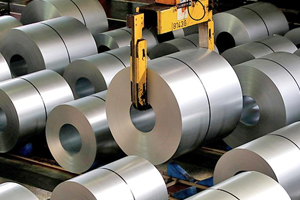
Stainless Steel Grades 2026: 304 vs 316L vs 201 vs 430 Explained
Stainless steel buyers in 2026 are working with a market that looks calm on the surface and is not. LME nickel settled at US$16,201 per tonne on 11 November 2026, up US$171 on the day and 6.09% higher month to date, yet still 2.7% below where it opened the year. Global stainless demand is forecast to grow 3.8% in 2026 and 4.4% in 2027, with total output potentially crossing 70 million tonnes next year. At the same time, China and Indonesia now account for roughly 72% of global stainless production, while EU output fell 3.7% in the first half of 2026 at a capacity utilisation rate near 63%.
That combination — flat headline prices, concentrated supply, and a widening gap between cheap and expensive grades — has pushed the grade decision back to the centre of procurement. The question is no longer "what does 304 cost today" but "which grade actually survives my application, and what am I paying for the difference". This guide answers that with the three numbers a buyer can verify independently: nickel content, PREN, and the cost pass-through per tonne of nickel movement.
The Four Grades Most Buyers Actually Compare
Most stainless steel enquiries that reach a mill resolve into four grades. The table below sets out what separates them, using typical composition ranges rather than single-point figures, because the spread within a grade is often larger than the gap between adjacent grades.
| Grade | Nickel | Chromium | PREN | Cost index | Where it earns its price |
|---|---|---|---|---|---|
| 304 / 1.4301 | 8.0–10.5% | 18–20% | 18–20 | 1.00 (baseline) | Food processing, kitchen equipment, sinks, architectural trim, general fabrication |
| 316L / 1.4404 | 10.0–14.0% | 16–18% | 24–26 | 1.35–1.55 | Coastal and marine exposure, chemical and pharmaceutical, brine and chloride service |
| 201 / 1.4372 | 3.5–5.5% | 16–18% | 17–20 | 0.72–0.85 | Dry indoor decorative work, trim, housings, visible parts where no chloride is present |
| 430 / 1.4016 | 0.75% max | 16–18% | about 17 | 0.62–0.75 | Appliance panels, automotive trim, high-temperature oxidation, non-welded components |
PREN here is calculated as Cr + 3.3 Mo + 16 N from typical chemistry, not from a single certified heat. Confirm the figure against the mill test certificate for the material you are actually shipping, because a 304 heat at 8.0% nickel and one at 10.5% nickel differ by roughly US$400 per tonne in metal cost while carrying the same grade stamp.
PREN: The One Number That Predicts Corrosion Failure
Pitting resistance equivalent number is the only single figure that reliably ranks stainless grades against chloride attack, and it is the number most purchase orders omit. It is a weighted sum of the three elements that stabilise the passive layer: chromium, molybdenum and nitrogen.
How the calculation works
PREN = Cr + 3.3 Mo + 16 N. Run it on typical chemistry and the ranking becomes obvious. For 304: 18 + 0 + 16 x 0.05, which gives about 18.8. For 316L: 17 + 3.3 x 2.1 + 16 x 0.05, which gives about 24.7. That six-point gap is the entire reason 316L exists, and it is bought almost entirely by the 2% molybdenum addition rather than by the extra nickel. For 430, the absence of both molybdenum and nitrogen leaves it at roughly 17, and for 201 the manganese substitution keeps it in a similar band to 304 on paper while behaving very differently in service.
What PREN does not capture
PREN is a chemistry screen. It says nothing about the four conditions that cause most real-world failures, which is why two coils with identical certificates can perform very differently on the same site.
- Surface condition. Embedded iron from a carbon steel brush, an unpassivated weld, or a rough ground finish will pit before a clean 304 does in mild service. Ra, pickling and passivation matter as much as the alloy.
- Sensitisation. 304 held between roughly 600 and 900 degrees Celsius during welding precipitates chromium carbides at the grain boundaries and drops local chromium below the passive threshold. PREN is computed on nominal chemistry and never sees this.
- Temperature and chloride concentration together. Resistance is a function of both. A grade that performs at 25 degrees in 200 ppm chloride can fail at 60 degrees in the same water.
- Crevice geometry. Gaskets, lap joints and thread roots create oxygen-starved gaps where predictions based on open-surface PREN consistently underperform.
Treat PREN as a screening filter, not a warranty. Use it to eliminate grades that cannot work, then specify surface finish, passivation and welding procedure to protect the grade you chose. Most corrosion claims we see are process failures on a correct grade, not grade failures.
Nickel Content Decides Your Cost, Not Your Tonnage
With nickel at US$16,201 per tonne, every 1% of nickel in the alloy carries roughly US$162 per tonne of raw metal cost before melting, rolling and yield losses. That single multiplier explains almost the entire price spread across the four grades, and it explains why your quotation moves when you have not changed your order.
- 304 at 8.0% nickel carries about US$1,296 per tonne of nickel; at 10.5% it carries about US$1,701. Same grade, roughly US$400 per tonne apart.
- 316L at 10 to 14% nickel carries between about US$1,620 and US$2,268 per tonne, before the molybdenum addition is counted.
- 430 at 0.75% maximum carries under US$122 per tonne, which is why it can be offered at a fraction of the 304 price.
The pass-through on a single nickel move is equally mechanical. The US$171 per tonne rise on 11 November translates to roughly US$14 to US$18 per tonne on 304 and US$17 to US$24 per tonne on 316L, while 430 moves by little more than US$1.30 per tonne. That asymmetry is the practical argument for grade discipline: if your application is dry and indoor, paying for 8% nickel to do a job that 0.75% nickel performs is a pure margin leak.
The forward picture argues against panic buying. Roughly 15 million tonnes of new stainless capacity is scheduled across China, Indonesia and India before 2031 against demand growth of less than 10 million tonnes over the same period, while 2026 apparent consumption sits near 58.5 million tonnes with Asia-Pacific taking 62% and China alone 38%. Structural oversupply caps the upside on nickel-driven price spikes, so contracts built on a 30-day alloy surcharge lag are usually safer than speculative stock builds.
Grade Selection Checklist by Application
Grade selection fails when it starts from price. Start from the environment, then let price eliminate options rather than choose them.
Food processing, kitchens and potable water
304 is the default and remains correct for most contact surfaces, sinks, work tables and dairy equipment. Move to 316L where chlorinated sanitisers, brine or high-temperature wash-down are routine, because the chloride load in cleaning chemistry is frequently higher than the chloride load in the product.
Coastal, marine and chemical service
Specify 316L with PREN at or above 24, and specify passivation as a separate line item. Within a few hundred metres of surf, 304 will develop tea staining within months even though it will not structurally fail, and the cosmetic claim that follows costs more to resolve than the upgrade would have.
Indoor decorative and cost-driven
201 is workable for dry indoor trim, housings and visible non-structural parts, on three conditions: no chloride exposure, no sustained humidity, and no expectation of the same corrosion reserve as 304. It is austenitic and non-magnetic in the annealed condition, so a magnet will not separate it from 304 — check manganese and nickel on the certificate instead.
Appliance panels, automotive trim and elevated temperature
430 is ferritic, magnetic, and the right answer for non-welded panels and trim where oxidation resistance matters more than formability in deep draws. It is not a welding grade: ferritic grain growth in the heat-affected zone causes ductility loss and cracking risk, so welded assemblies should move to an austenitic grade or a stabilised ferritic.
Frequently Asked Questions
Is 201 a safe substitute for 304?
For dry indoor decorative parts, usually yes, provided no chloride and no sustained humidity are present. For anything washed down, coastal, or exposed to cleaning chemicals, no: the reduced nickel and molybdenum substitution leaves far less corrosion reserve, and failures typically appear as surface pitting rather than as an obvious structural warning.
What PREN do I need for a coastal installation?
Aim for 24 or above, which in practice means 316L. Below that threshold, expect tea staining within months in a marine atmosphere even where the material remains structurally sound. For splash zones and salt-fog-exposed cladding, combine the grade choice with a passivation step and a specified surface finish.
Why does my 304 price change between quotation and shipment?
Most stainless offers are priced with an alloy surcharge indexed to LME nickel, adjusted monthly with a lag of roughly 30 days, plus separate currency and freight components. The base conversion cost is stable; the surcharge is not. Ask for the index date and the nickel reference used, and the movement stops being a surprise.
How do I verify the grade on arrival?
Three checks in sequence: an EN 10204 3.1 mill test certificate for the specific heat, a positive material identification spot check by XRF on a sample of sheets or coil ends, and a PREN calculation from the certificate chemistry. If the calculated PREN does not match the grade you ordered, you have a documentation problem worth resolving before the material reaches the production line.
In a year of flat headline prices and concentrated supply, the grade decision is where the money is made or lost. Nickel at US$16,201 per tonne prices every percentage point of alloy content at roughly US$162 per tonne, demand growth of 3.8% keeps volumes moving, and 72% of global output concentrated in two countries means specification discipline matters more than sourcing luck. Choose the grade from the environment, verify it with PREN and a mill certificate, then negotiate on the surcharge mechanics rather than the headline number.
Review our stainless steel coil and sheet range, read more grade selection and corrosion guides, or contact the MESCO Steel team for 304, 316L, 201 and 430 supply with mill certificates, PREN verification and alloy surcharge terms stated up front.