

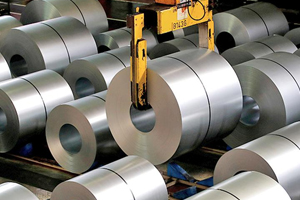
Powder Coated Steel 2026: The Complete Guide to Eco-Friendly, Durable Steel Coating Solutions
Powder Coated Steel — an electrostatic dry finishing process that creates a tough, durable, and decorative surface with zero VOC emissions. Global powder coated steel tubing market valued at USD 4.45 billion (2025), projected to reach USD 6.31 billion by 2032 (CAGR 5.12%).
What Is Powder Coated Steel?
Powder coating is a dry finishing process that uses finely ground particles of pigment and resin. The powder is electrostatically charged and sprayed onto a grounded steel surface. The coated part is then heated in a curing oven (180–200°C), where the powder melts, flows, and chemically cross-links to form a continuous, uniform film.
The Powder Coating Process Step by Step
| Step | Description | Quality Control Check |
|---|---|---|
| 1. Surface Preparation | Degreasing, phosphate treatment, rinsing | Water break test, surface cleanliness |
| 2. Drying | Removing moisture from the pretreated surface | Surface temperature ≥ 60°C |
| 3. Powder Application | Electrostatic spray deposition (corona or tribo charging) | Film thickness gauge, Faraday cage check |
| 4. Curing | Convection or IR oven at 180–200°C for 10–20 min | Cure schedule, MEK solvent rub test |
| 5. Cooling & Inspection | Natural cooling, thickness, adhesion, color check | Cross-hatch adhesion, gloss meter, spectrophotometer |
Types of Powder Coatings
- Thermoset powders (90% of market) — Epoxy, polyester, epoxy-polyester hybrid, polyurethane, acrylic. Cross-link during curing to form irreversible, chemically resistant coatings
- Thermoplastic powders — PVC, nylon, polyolefin. Melt and flow but do not chemically cross-link. Used for thick-coat applications requiring exceptional impact resistance
Powder Coated Steel Applications in 2026
Construction and Architecture
The construction sector consumes approximately 40% of global powder coated steel production. Key applications include:
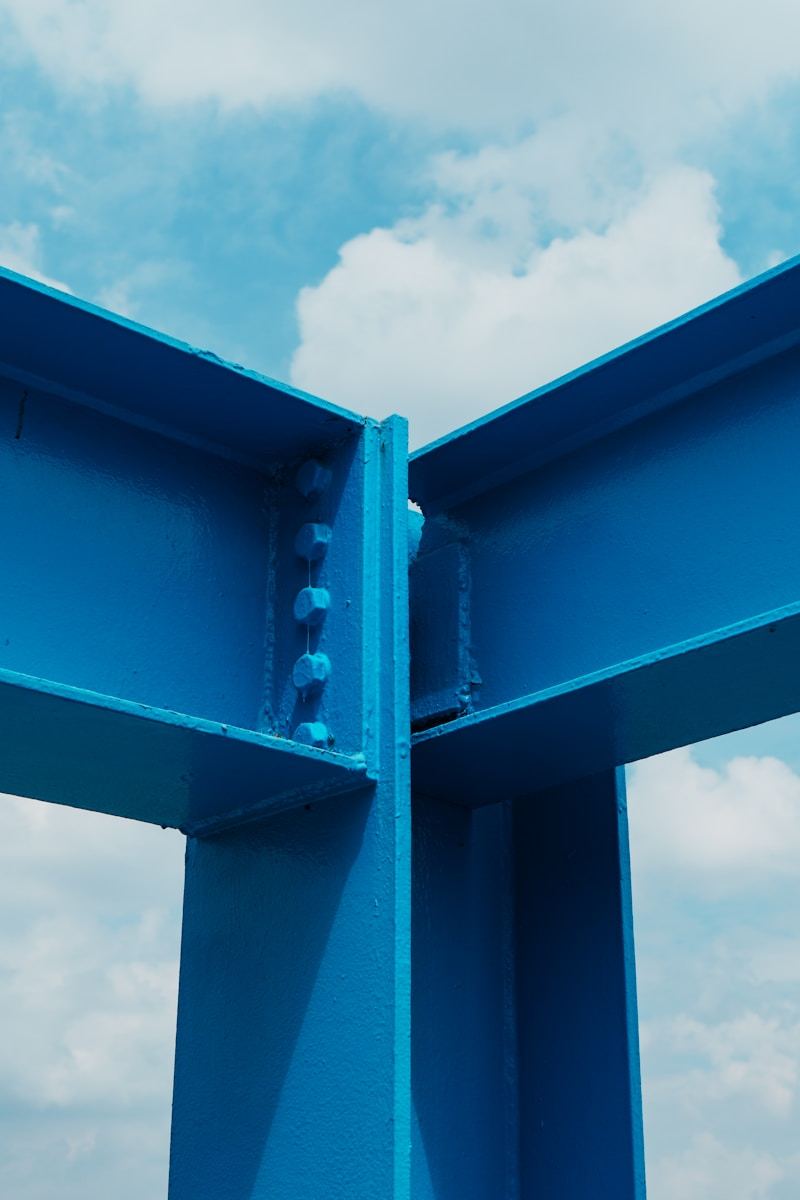
- Structural steel framing — I-beams, H-columns, and trusses. Heavy-duty epoxy-polyester hybrid coatings with 80–120μm thickness provide 15–20 years of corrosion protection
- Architectural cladding — Façade panels, curtain wall systems, rainscreen cladding. Super-durable polyester powders offer 25–30-year warranties
- Handrails and balustrades — Texture powders (wrinkle, hammer, sand texture) hide weld marks and surface imperfections
- Fencing and gates — Hot-dip galvanized steel with powder topcoat provides 25+ years of service life
Automotive and Transportation
- Wheels and rims — Silver, gloss black, and custom-color powder coating on steel and aluminum alloy wheels
- Suspension components — Control arms, stabilizer bars, and spring assemblies coated with anti-corrosion epoxy powders
- Truck and trailer frames — Heavy-duty polyester powder coating over zinc-rich primer for chassis components
- Bicycle frames — Decorative powder coating in unlimited colors, replacing traditional wet paint
Furniture and Interior Design
- Office furniture — Desk frames, cabinet bodies, and shelving systems. Wrinkle and texture finishes hide fingerprints
- Outdoor furniture — Garden chairs, tables, and loungers. UV-stable polyester powders with 5–7-year gloss retention
- Retail displays — Shelving, racks, and point-of-purchase displays
Advantages of Powder Coating Steel
| Advantage | Detail |
|---|---|
| Zero VOCs | No solvent emissions — compliant with EPA, EU VOC directives, and China's environmental standards |
| Durability | Impact resistance up to 80–160 in·lb (direct), 60–120 in·lb (reverse) |
| Uniform coverage | Electrostatic application ensures even coating on complex geometries, edges, and corners |
| Color consistency | Computer-controlled batch mixing ensures ±0.5 ΔE color consistency |
| Cost efficiency | 95%+ material utilization (overspray is recyclable), faster production cycles |
| Thick coating | Single coat achieves 60–120μm, reducing need for multiple coats |
Powder Coating Technology Innovations 2026
Nano-Enhanced Powders
Nanoparticle additives (silica, alumina, titanium dioxide) are being incorporated into powder formulations to enhance:
- Scratch resistance — Nano-silica particles increase surface hardness by 30–50%
- Anti-bacterial properties — Silver-ion and zinc-oxide nanoparticles provide 99.9% bacterial reduction (ISO 22196 certified)
- UV stability — Nano-TiO₂ absorbers extend outdoor gloss retention by 40%
Super-Durable Outdoor Powders
- 30-year warranty against fading and chalking (gloss retention >70% after 10 years Florida exposure)
- Salt spray resistance exceeding 2,000 hours (ASTM B117)
- Weathering resistance equivalent to 70–80% PVDF performance at 40–50% lower cost
Low-Temperature Cure Powders
Traditional powder coatings require curing at 180–200°C. Low-temperature cure powders (140–160°C) enable coating of heat-sensitive substrates, reduce energy consumption by 15–25%, and increase line speed.
How to Choose a Powder Coated Steel Supplier
1. Coating Line Capability
- 5-stage or 7-stage pretreatment with iron phosphate or zinc phosphate
- Convection, infrared, or combination curing oven — uniform temperature control within ±5°C
- Online continuous thickness gauging, typically 60–120μm
- Spectrophotometer verification, ΔE ≤ 0.5 for color matching
2. Quality Certifications
- ISO 9001:2015 — Quality management system
- Qualicoat or GSB certification — European powder coating quality standards
- AAMA 2603 / 2604 / 2605 — Architectural standards for Middle East and Southeast Asia projects
- Salt spray test — 500–2,000+ hours per ASTM B117
3. Color and Finish Options
- Standard colors: RAL, Pantone, BS, or NCS color systems
- Texture finishes: Smooth, gloss, matte, wrinkle, hammer, sand texture, metallic
- Gloss range: 5–95 GU (Gardner units) at 60°
FAQ About Powder Coated Steel
A: For most industrial and architectural applications, yes. Powder coating offers superior durability, zero VOCs, thicker and more uniform coverage, and higher material utilization (>95% vs. 50–60% for liquid paint). The main limitation is that powder coating requires curing at high temperature.
A: Standard polyester powder coatings provide 5–10 years of outdoor service life. Super-durable polyester and polyurethane powders can last 15–25 years, with some products offering 30-year warranties. Hot-dip galvanized steel with a powder topcoat (duplex system) can exceed 25 years even in C4–C5 environments.
A: Minor scratches and chips can be touched up using liquid touch-up paint matched to the powder color. For larger areas, the damaged section must be stripped and recoated. Zinc-rich epoxy primer touch-up is recommended for cut edges or weld areas.
A: Virtually any RAL, Pantone, or custom color. Common architectural colors include RAL 9006 (silver), RAL 7016 (anthracite grey), RAL 9010 (pure white), and RAL 9005 (jet black). Texture options include smooth gloss, matte, wrinkle, hammer, sand, and metallic finishes.
A: For powder coated steel tubing and pipe, typical MOQ is 5–10 MT. For sheet products, 5–15 MT depending on thickness and color. Small-batch custom color runs are available at 1–2 MT with a surcharge for color changeover.
MESCO Group — supplying high-quality powder coated steel products to global markets since 2007. Our modern powder coating lines feature 7-stage pretreatment, advanced electrostatic spray booths, and precise curing oven control for consistent quality across every batch. We offer RAL standard colors, custom color matching, and textured finishes for construction, automotive, furniture, and appliance applications. Contact us for a free quotation and product samples.